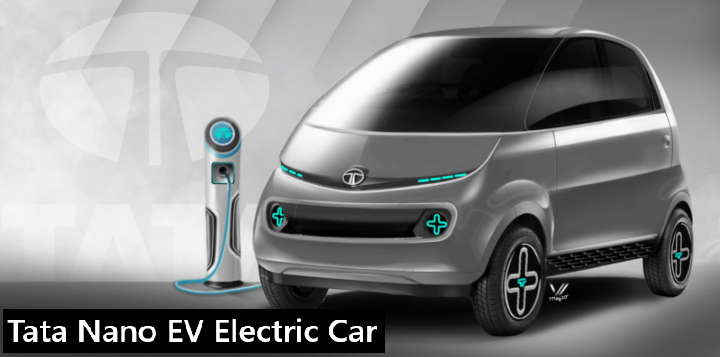
Tata Nano EV Electric Car: India’s Most Affordable Electric Hatchback Redesigned
The iconic Tata Nano is making a triumphant return, this time as an electric vehicle! With rising demand for environmentally friendly and cost-effective electric vehicles, Tata Motors is preparing to reintroduce the famous Nano in a new form: the Tata Nano EV Electric Car.
As India strives for a greener automotive future, the Tata Nano EV is poised to redefine urban mobility. This compact, inexpensive, and environmentally friendly vehicle is set to shake up the entry-level electric vehicle (EV) market. In this article, we will go over all you need to know about the Tata Nano EV, from its expected introduction, features, and design to its range and competitive advantage in the Indian EV market.
Read More: Tata Nano EV Launch Date: Know About First Look, Expected Range & Price
Why Does the Tata Nano EV Electric Car Matter?
A New Era for Nano
The Tata Nano, debuted in 2008 as the “world’s cheapest automobile,” sought to provide affordable transportation for all. Despite its novel concept, the petrol version did not meet sales expectations. However, as India moves toward electric transportation, Tata Motors sees an opportunity to relaunch the Nano as an inexpensive electric choice.
The Tata Nano EV has the potential to bridge the gap between price-sensitive consumers and environmentally concerned technology, making electric vehicles more accessible than ever in India.
Tata Nano EV’s Key Features (Expected)
As of April 2025, Tata Motors has yet to formally unveil the Tata Nano EV. Various industry speculations and prototype leaks give us a sneak peek at what is on the horizon:
Here’s the text we will be diving into:
1. Electric Powertrain:
- Battery capacity: 15-17 kWh lithium-ion battery
- Driving range: 150-200 km on a single charge
- Charging time: 5-6 hours with a standard charger or 1.5 hours with fast charging
- Top speed: 80-90 km/h
- Transmission: Automatic (single-speed).
The Tata Nano EV’s mileage or range is expected to be a selling point for city dwellers looking for an economical and environmentally friendly mode of transportation.
2. Compact Urban Design – Maintains a modest size ideal for parking and traversing narrow streets.
– Expected exterior improvements for a new look: LED daytime running lights, smooth aerodynamic lines, and new color options
3. Modern interiors. – Comfortable seating for four with increased cabin space – Smartphone-compatible touchscreen infotainment system – Digital instrument cluster – Power steering, windows, and air conditioning.
4. Safety and Technology-—Features include dual airbags, ABS with EBD for better braking, rear parking sensors for convenience, regenerative braking for efficiency, and stronger structural integrity to fulfill EV norms.
Tata Nano EV Launch Date and Pricing in India
While nothing is etched in stone, industry insiders believe Tata Motors will launch the Tata Nano EV in late 2025 or early 2026. They are apparently partnering up with Jayem Automotives, which previously collaborated on the Neo EV.
Anticipated Tata Nano EV Price in India: The Tata Nano EV is anticipated to be among the most affordable electric vehicles in India, with a price range of ₹4 lakh to ₹6 lakh (ex-showroom). With this price plan, the Nano EV would be significantly less expensive than rivals like the Tata Tiago EV and the MG Comet EV.
Tata Nano EV against Rivals
Let us examine how the expected Nano EV compares to its closest competitors in the market:
The Tata Nano EV Electric Car’s advantages
- Everyone Can Afford an EV: The Nano EV’s pricing point is one of its best qualities. Given that electric cars can be highly expensive in India, middle-class families and first-time car buyers can now afford electric mobility thanks to options under ₹6 lakh.
- Perfect for Driving in Cities: The Tata Nano EV is ideal for handling short trips, navigating city traffic, and parking in small spaces because of its lightweight construction, automatic transmission, and tiny size.
- Minimal Operating and Maintenance Expenses: In general, electric cars require less maintenance than cars that run on gasoline or diesel. Being all electric, the Nano EV will cost between ₹1 and ₹1.5 per kilometer to operate, which is a significant savings over conventional hatchbacks.
- Sustainable: The Tata Nano EV contributes to the reduction of urban pollution by having zero tailpipe emissions, which helps India achieve its goal of having net-zero emissions by 2070.
Challenges and Things to Think About
- Anxiety about range: The Nano EV is ideal for daily commutes but may not be the greatest option for lengthy road trips due to its estimated 150–200 km range.
- Infrastructure for Charging: The charging infrastructure in India is improving, but not all places have it. For those who come on board early, having a home charger will be crucial as Tata Power works to expand its charging network.
- Shifting Perception of the Market: It will take some ingenious branding and marketing techniques to change the Nano’s reputation as a “cheap car” into that of a smart city electric vehicle.
India’s Electric Vehicle Movement and the Tata Nano EV
With the government implementing a number of incentives under the FAME II scheme and state-level subsidies, the electric vehicle market in India is expected to expand quickly. Tata Motors is already a major force in this field, and the Tata Nano EV may enable it to enter the market for reasonably priced EVs.
Electric cars are more than just a fad in India; they are the way of the future thanks to supporting regulations, growing environmental concerns, and rising gasoline prices. The Tata Nano EV is in a good position to lead this shift at the local level.
FAQs Regarding the Tata Nano EV
Q 1. Has India seen the launch of the Tata Nano EV?
The Tata Nano EV has not formally entered the market as of April 2025. It is currently under development and is anticipated to launch in late 2025 or early 2026.
Q 2. What is the Tata Nano EV’s anticipated range?
On a full charge, it should travel between 150 and 200 kilometers.
Q 3. What is the price of the Tata Nano EV in India?
It is expected to cost between ₹4 lakh and ₹6 lakh (ex-showroom), making it one of the most affordable electric cars available.
Q 4. Can I use my home to charge the Tata Nano EV?
Absolutely! Both access to public fast charging stations and home charging are probably supported.
Conclusion: Is the Tata Nano EV Worth Waiting for?
The Tata Nano EV is undoubtedly one to watch if you are looking for a reasonably priced electric vehicle for your everyday commute and wish to support India’s green revolution. It promises to be environmentally conscientious, practical, and affordable—all combined into a little package.
The Nano EV may be the entry-level electric vehicle that India has been eagerly awaiting, given Tata Motors’ strong reputation in the EV industry and the growing EV infrastructure.
You Reading this Article On Subhalaxmi.in.